
Our own projectDirectory website
ClonedGames — an open-source
games catalog.
A connected catalog of almost 7,000 pages.
We developed and launched ClonedGames: data collection, AI-assisted content, categorization, links to originals, search and comparisons.
View the website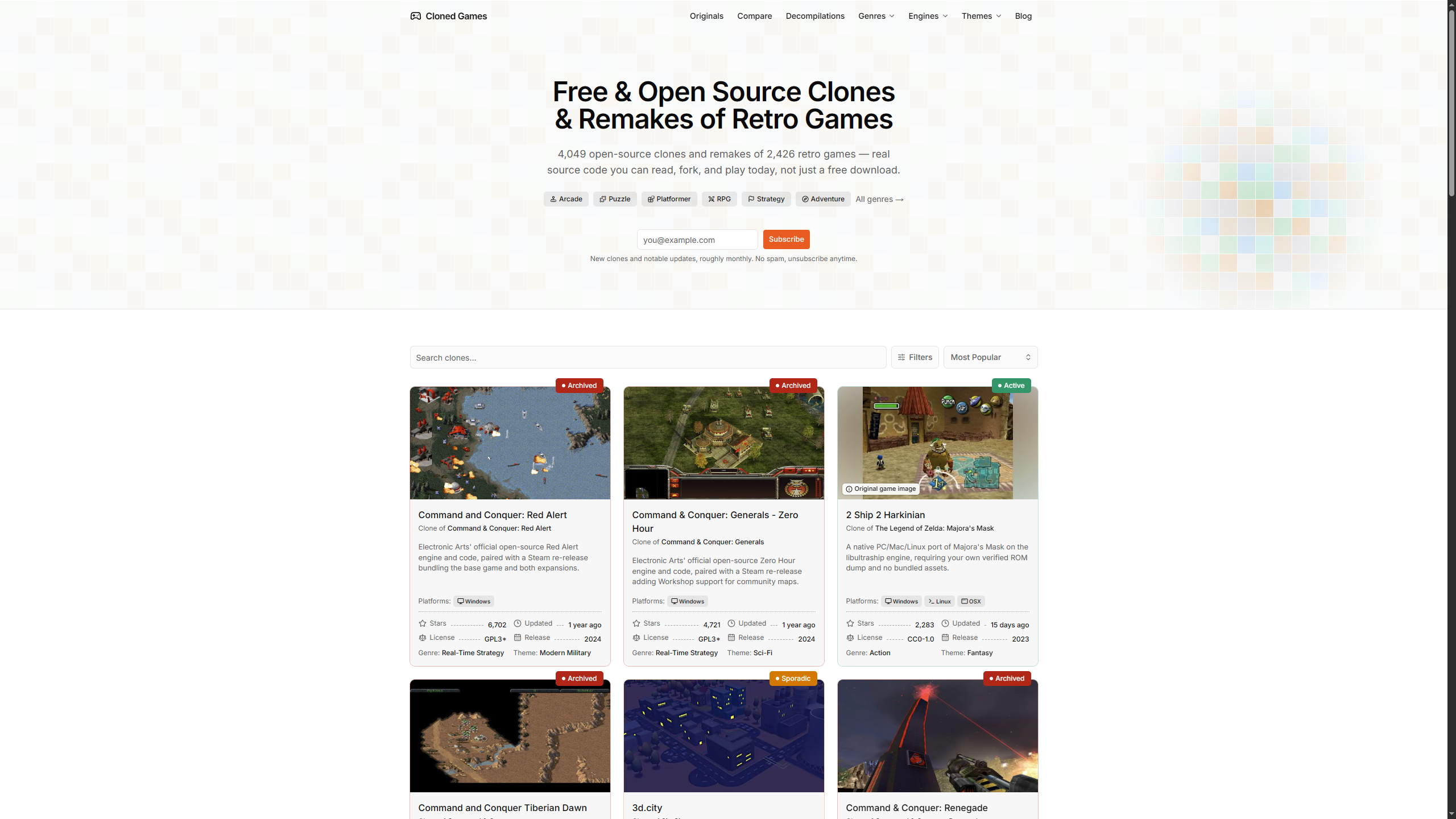
- ≈ 7 000
- connected pages
- 4 000+
- project cards
- 2 000+
- original games
- 600+
- comparisons
The task
ClonedGames is our own web service for finding open-source clones, remakes and other projects related to original games. We developed and launched the site, prepared its content and organized the links between thousands of records.
The goal was to turn scattered information from repositories, stores and game reference sites into a clear catalog. Visitors should be able to find projects by game, platform or genre, understand the differences between implementations, and go to the source code or project page.
Scale of the work
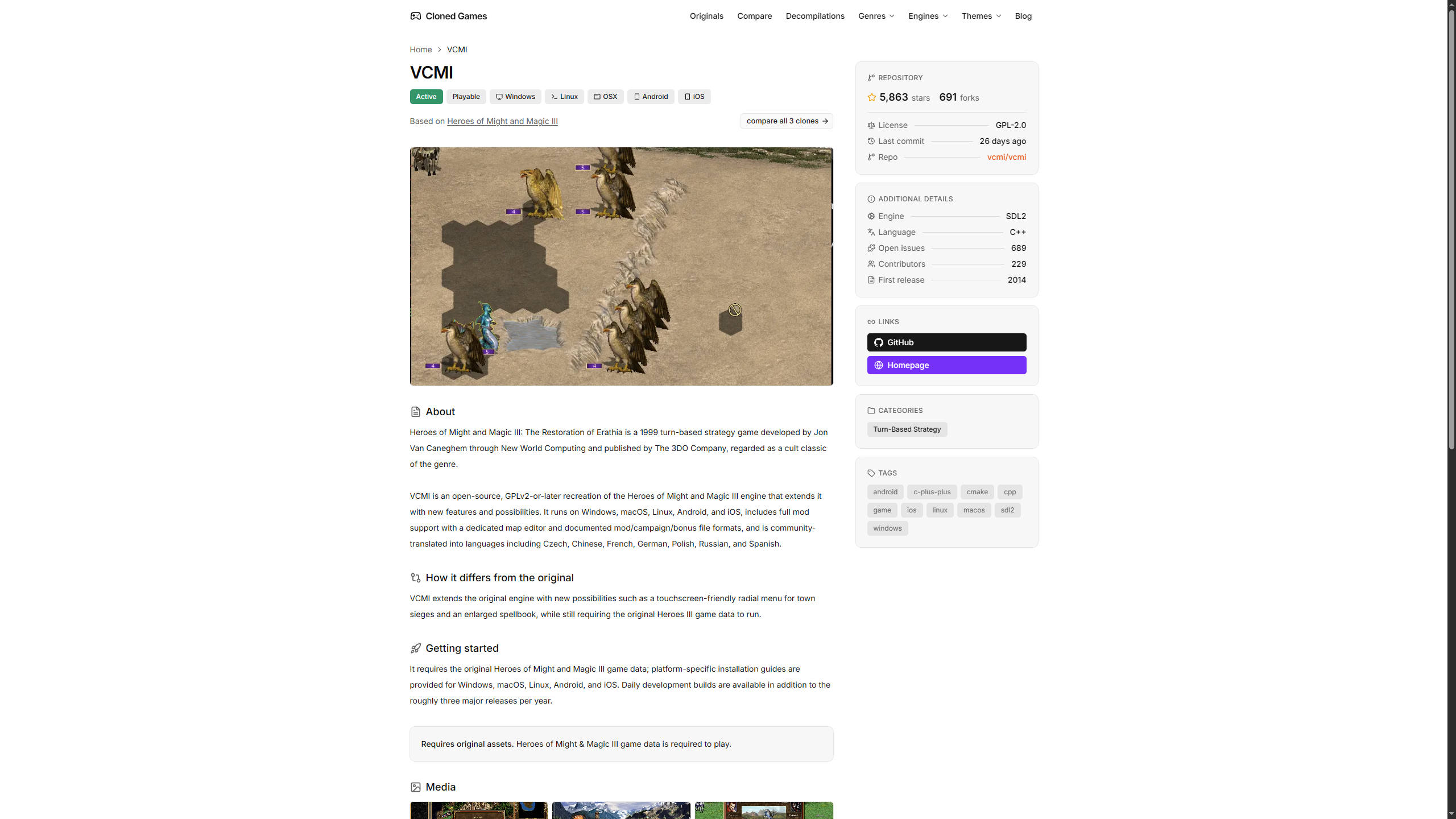
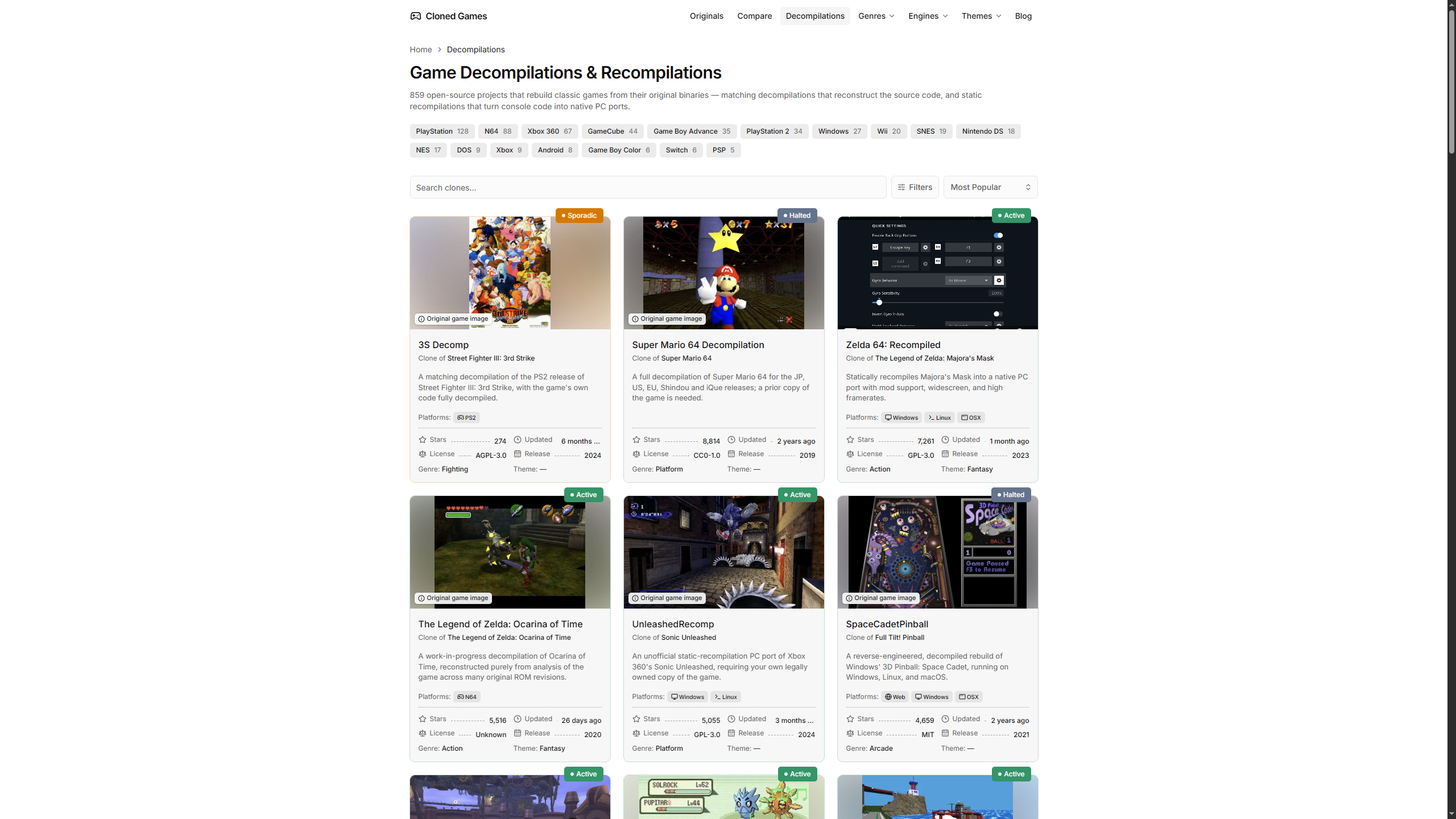
We created a connected catalog of almost 7,000 pages: more than 4,000 project cards, more than 2,000 original game pages and more than 600 comparisons, plus sections by genre, engine, theme and decompilation platform.
Behind each group of pages is data work: collecting source materials, classification, matching originals, descriptions, media and navigation links. Pages are generated from a shared database and templates; content is prepared through the data processing system we built, followed by editorial review.
Data collection and preparation
We set up data collection from GitHub, GitLab, Steam, itch.io, SourceForge, Wikipedia and Wikidata. The sources serve different purposes: repositories provide information about code and development status, stores provide descriptions and images, and reference sites help verify details about original games.
Source materials are stored separately from extracted facts and finished descriptions. This makes it possible to revise the classification or re-prepare text from sources already collected. Updates track data freshness separately: processing one source must not create the impression that the others have been updated too.
Categorization and links to originals
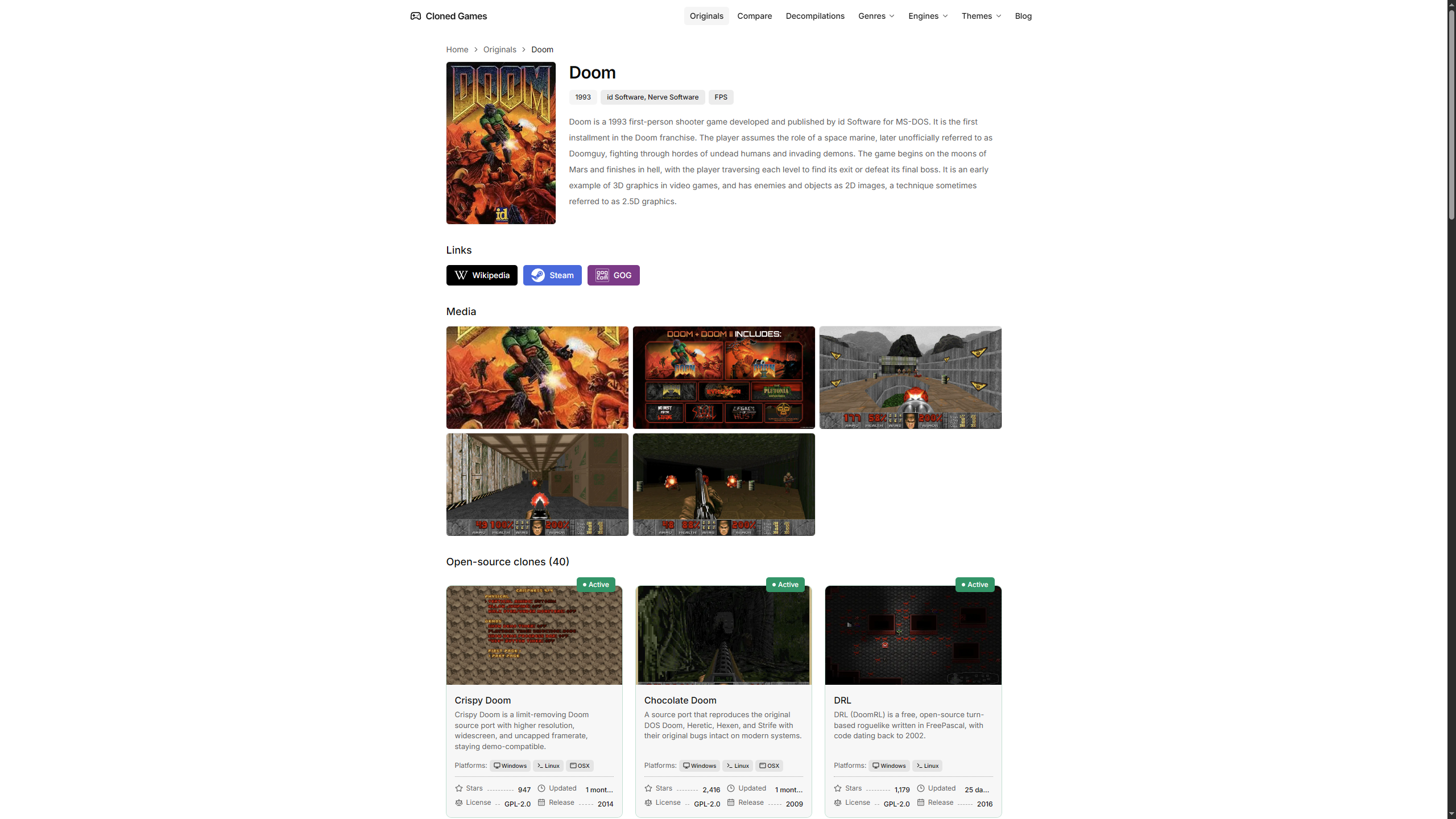
For the catalog, it is important to distinguish similar names, a single game and a series, a remake and a port, a decompilation and a developer tool. These decisions determine the site's sections and the accuracy of comparisons.
We developed processing for genres, themes, platforms and project types. Matching originals takes into account the title and additional attributes, including platform. Ambiguous cases go through separate review; when information is insufficient, a link is not filled in by guesswork.
The content history includes corrections of erroneous links to reference sites and manual review of disputed records. Projects related to several games can have multiple links to originals. This makes the catalog a system of interconnected materials: from a card you can go to the original game, other implementations and a comparison.
AI content preparation and fact checking
We used AI to process sources, classify projects and prepare descriptions. Context is built from the project's real materials: README files, repository details, descriptions and structured fields.
For the decompilations section, we developed an additional check: claims in a description are compared with the source text, and the supporting quotes provided by the model are verified by code. Unconfirmed sentences are removed, and disputed results are sent for review. This helps limit made-up information in large-scale content production.
This process does not replace editorial control and does not guarantee the absence of errors in all materials. It lets us use AI where the volume of work is large while keeping the ability to check where facts come from.
Images and media
We prepared the collection and processing of images from several sources. For part of the media, we set up our own storage, availability checks and removal of broken links.
If a project has no images of its own, the card can show an image of the related original game with a clear caption. Visitors can see what is pictured and do not mistake a frame from the original for a screenshot of a specific remake.
For heavy animated images, we built separate loading: a static frame is shown first, then the animation loads. This keeps useful media while reducing their impact on the initial page display.
Search, comparisons and mobile interface
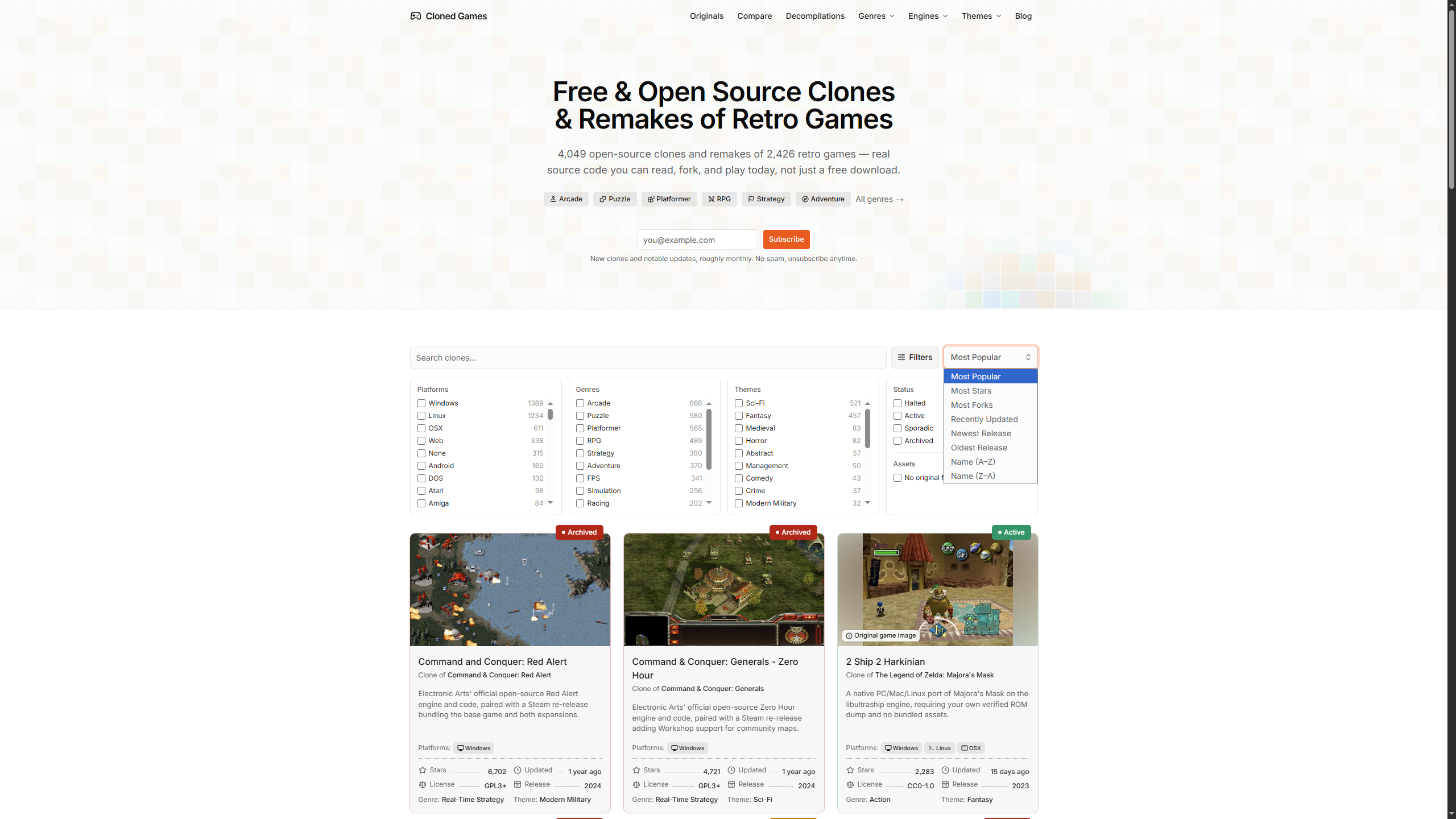
We implemented search, filters, sorting and pagination. Visitors can choose projects by platform, genre, theme, development status and whether original game files are required.
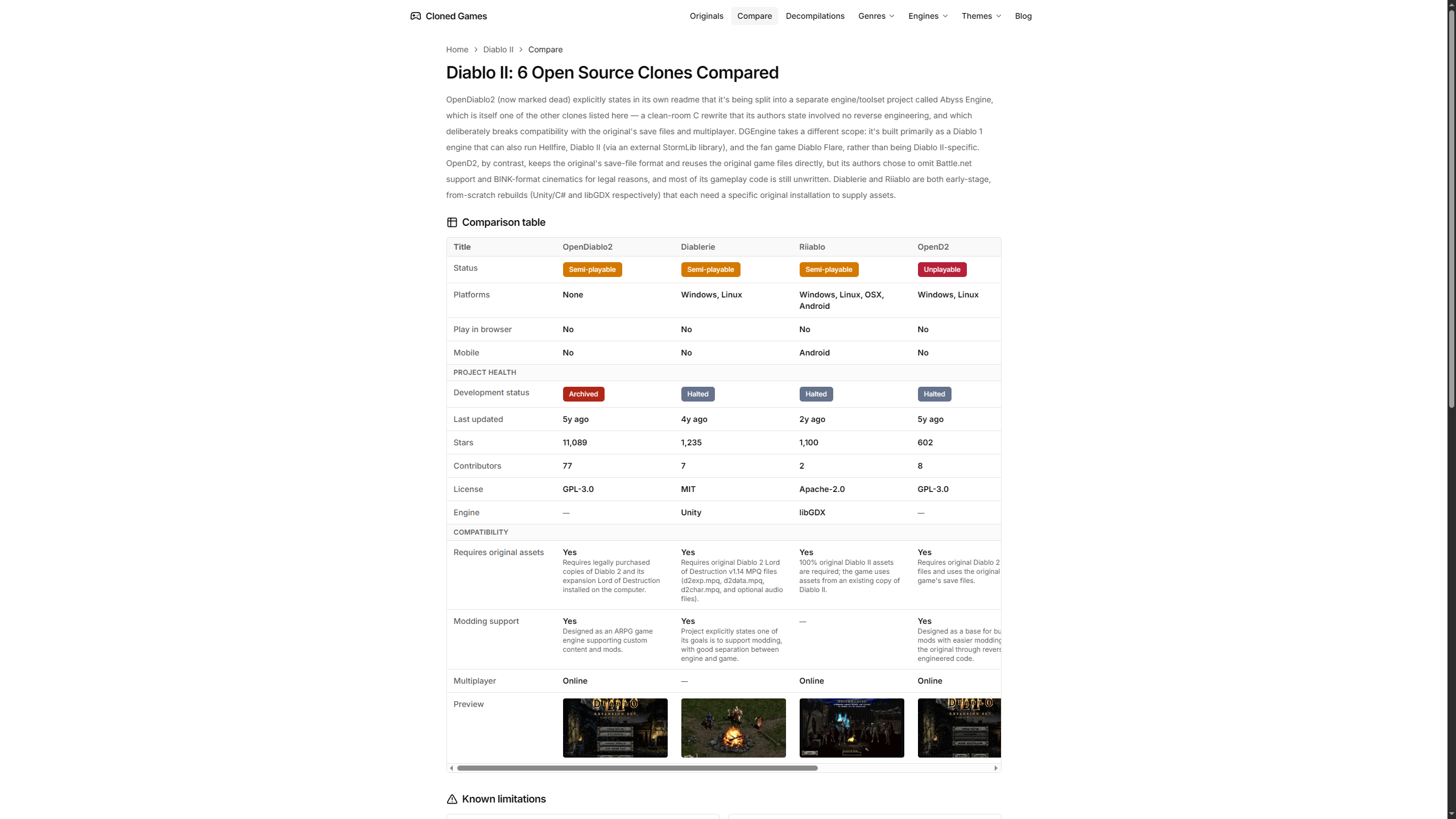
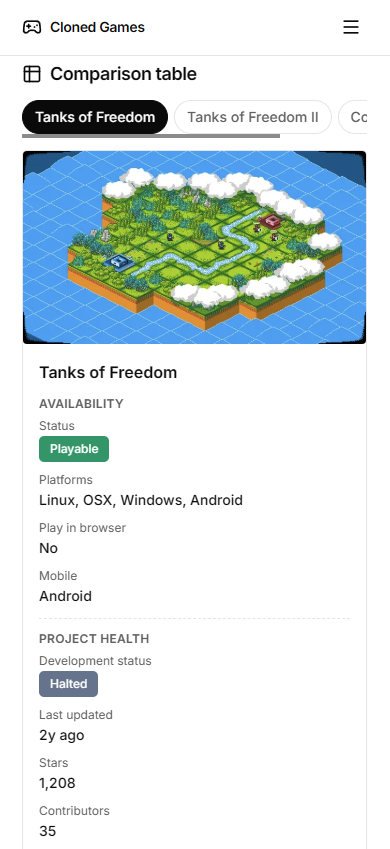
Comparisons show several implementations of one game: availability, project status, compatibility and known limitations. On desktop it is a table; on a phone, separate cards with switching and swiping. The mobile version lets visitors read the details without squeezing a wide table to fit the screen.
We added a blog linked to catalog projects, user inquiries and administrative data management.
1 / 3
Performance and publishing
For a catalog of this size, interfaces are not the only concern: database query cost, page preparation and media loading matter too. During development we reworked heavy queries that count related records, added data caching and prepared page warm-up after the server starts.
We set up deployment of the application, database, admin panel and media storage on our own server. We prepared a sitemap, metadata, structured data and rules for excluding insufficiently populated pages from search indexing.
Result
We launched ClonedGames as a working web service with thousands of connected pages. We implemented the full set of core catalog components: source processing, AI-assisted content, categorization, matching originals, media, search and comparisons.
The project shows our work with large volumes of content, linked data, automation and user interface within a single product. The games and their source code belong to their respective authors; our work is the service itself and the preparation of the catalog.