Whatwe do
Web service and application
development.
Have an idea for your own service? We'll design and launch a first working version around the user's main task. We start with the necessary features and plan further development based on the results. We also take on more complex projects after an initial assessment.
Discuss a service


Guideline for one main scenario
$1000–1500
Scope and timeline set after assessment
This is a guideline for a compact but complete small service, not a fixed price for any project. Several screens and server-side processing can serve a single task. We agree on more complex scope individually.

Mid-size service
from $1500
For a mid-size service. The final price depends on the complexity of features and integrations. We agree on the scope, stages and timeline after assessment.
A first version with a complete result
- The main user journey: from entering data to a useful result.
- Interface and server logic within the agreed scope.
- Data storage and connections needed for the chosen scenario.
- Testing of features, errors and applicable access permissions.
- Launch in the agreed environment, source code, access and instructions.

01 / 05
One task doesn't have to mean one screen
For example, a user enters a topic, the service retrieves and processes data, then shows a report with the necessary filters. Input, waiting and results can take up several screens while remaining one main scenario. This is an example of a possible task, not a promise of a specific set of features in the guideline.
An MVP is the first working version of a product, one you can use to test the main scenario in practice. Together we'll define who needs it, what result it delivers and which features can wait. We fix the feature set before development.

02 / 05
Scope fits the task, technology fits the scope
We agree on the interface, processing, data, external connections and constraints. Registration, multiple roles, payment acceptance and an admin panel are included if they're needed and listed in the task; they are not automatically part of every project.
AI isn't required. We use it where it helps the chosen process, with a planned check of the output. We choose the platform and architecture based on features, hosting requirements and plans for growth.

03 / 05
A complex project can be split into stages
If the idea is broader than one small scenario, we agree on stages that each produce a standalone, verifiable result. For each, we define the features, limits, deadline, price and payment schedule.
We estimate new requests before including them in the work. Scope and price don't increase automatically; we agree on the change first. We'll define the prototype and its level of detail based on the order.

04 / 05
Operation and development after launch
Before we start, we'll discuss suitable infrastructure, expected load and costs. Hosting, database, storage, API, AI if needed and other paid services are paid for separately by the client. We'll show the cost estimate with clear assumptions.
We'll define load and availability terms and limits for the project. Further monitoring, support and new features are agreed separately. The domain and client accounts are registered in your name, and we help with setup.
What we check at handover
- The user completes the main flow and gets the agreed result.
- Invalid data, an empty result and a repeated operation are handled according to the rules.
- A failure of an external service is not presented as a success.
- If there are users, roles, payments or files, we check the relevant permissions and operations.
- The agreed load terms and spending limits are taken into account in the checks.

05 / 05
Checking the result
Before implementation, we'll fix the expected behavior and test cases. At handover, we'll check the agreed scenarios on the finished service.
Our project
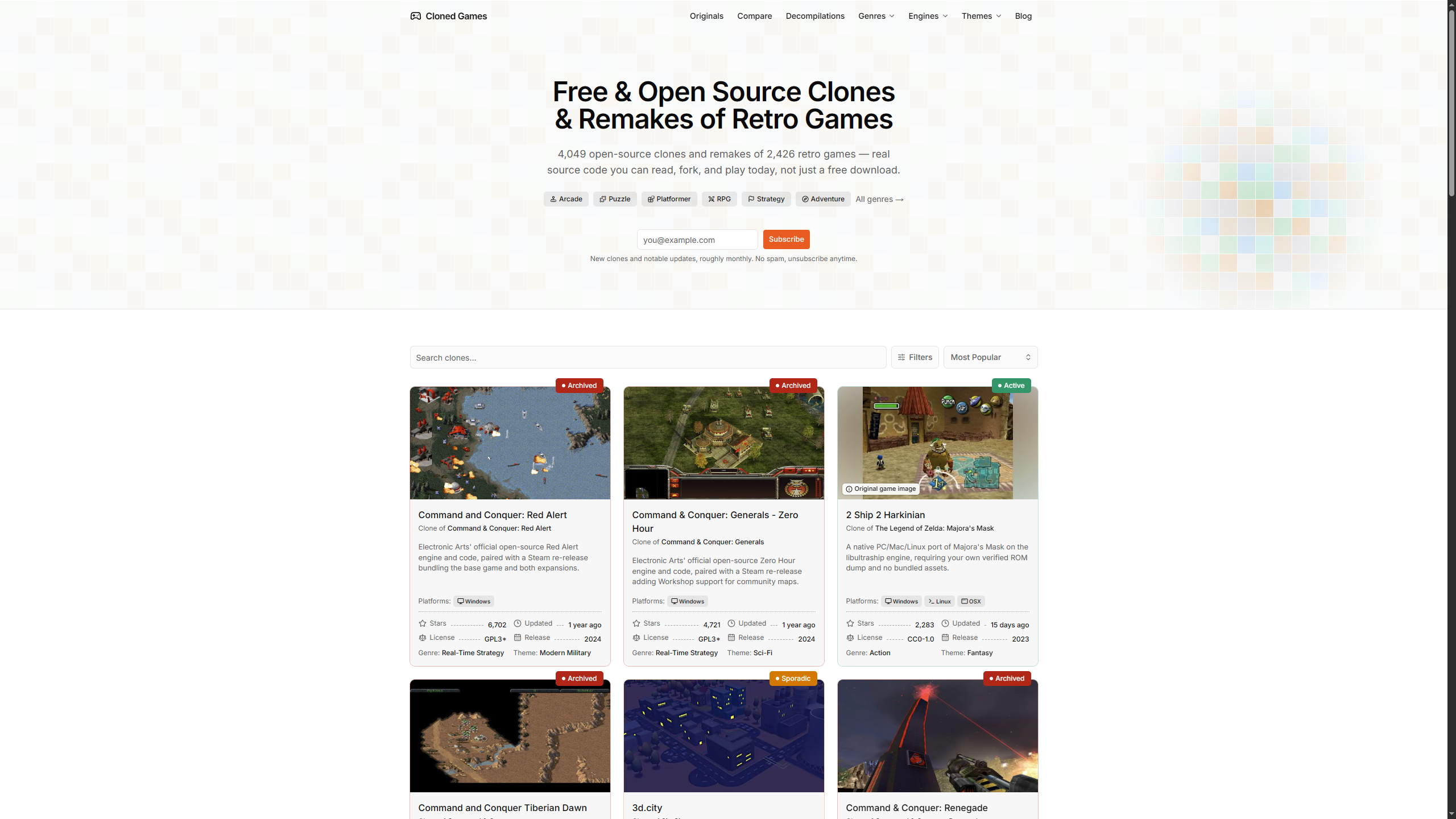
Our own web service: ClonedGames
ClonedGames is our own live game catalog with search, categories and comparisons. The case study shows real features and original screens. It is an example of our work, and its full scope is not tied to the small MVP guideline.
→View the ClonedGames case studyHow wework
From idea to a working version
- 01
We clarify the task
We'll define the user, the main result, systems, constraints and materials.
- 02
Agree on the first version
We'll fix the features, what is postponed, acceptance criteria, price and deadline. The prototype covers the agreed scope.
- 03
Build and test
We'll build the interface and logic, and test the main flow and the agreed error cases.
- 04
Launch and hand over
We'll agree the launch procedure for your order. We'll hand over the source code, access and instructions, and record acceptance.

Terms of
work.
Price, payment and changes
After the estimate, we'll fix the exact cost and scope. For a small service: 25% before work and 75% after the result is checked. For a complex project, we'll agree stages separately, with review and payment for each.
We'll agree the specific launch procedure for your order. Infrastructure, paid services and new features are paid for separately. The guideline does not cover arbitrary integrations, any load, or the full feature set of an external analog.
Your source code and access
We'll hand over the source code, access and launch instructions. Acceptance is recorded by your dated confirmation in the agreed channel. For 30 days after confirmed acceptance, we fix errors in our implementation for free within the agreed scope; further development and support are separate.
If the handover is made without ongoing support, you revoke our permissions and change the passwords and keys known to us, following a list. We record what is handed over, request confirmation, and remove our own access where we can. We assess the consequences of later changes by their cause; we don't automatically rule out our own errors.
Before launch.
Questions and answers.
What does one main scenario mean?
One complete path to a result, for example data entry, processing and a report. It can include several screens, storage and server logic. We define the scope after the estimate.
Do you take on more complex projects?
Yes. We agree features, stages, verifiable results, cost and deadlines individually.
Are AI and registration required?
No. We add them if the task needs them and they are included in the agreed scope.
Will any service cost $1000–1500?
No. This is a guideline for a small, all-in-one service built around a single task. The exact price depends on features, integrations and requirements.
Who pays for the API and hosting?
The client pays separately. Before work starts, we'll show the expected costs and the estimate's assumptions; load and pricing plans may affect the amount.
Can the service be developed further after the first version?
Yes. We hand over the source code and access; further features and support are agreed separately. During the first 30 days after confirmed acceptance, we fix our errors within the original scope.

What task will your service solve?
Describe the users, the result you need, the systems involved and any constraints. A detailed specification isn't needed for the first conversation. Access, passwords and private documents are shared later by an agreed method, not through the public form.
Discuss a service